
What Is Pilot Training?Complete Guide to PPL and CPL Courses
pgvisav@gmail.com
August 19, 2026
•12 min read
Pilot training is a structured aviation programme that prepares candidates with the theoretical knowledge, practical flying skills, decision-making ability, and technical understanding required to operate an aircraft safely.
In India, pilot training is regulated by the Directorate General of Civil Aviation (DGCA). Students who want to build a professional flying career usually pursue a Commercial Pilot Licence (CPL) course after completing the required academic, medical, theoretical, and flying requirements.
This complete guide explains everything about pilot training in India.
What Is Pilot Training?
Pilot training is the process of learning how to safely operate an aircraft through classroom learning, simulator sessions, and practical flying experience.
A professional pilot must understand much more than just controlling an aircraft. Training develops skills in:
- Aircraft operations
- Aviation regulations
- Navigation
- Weather understanding
- Aircraft systems
- Radio communication
- Emergency handling
- Crew coordination
- Decision-making skills
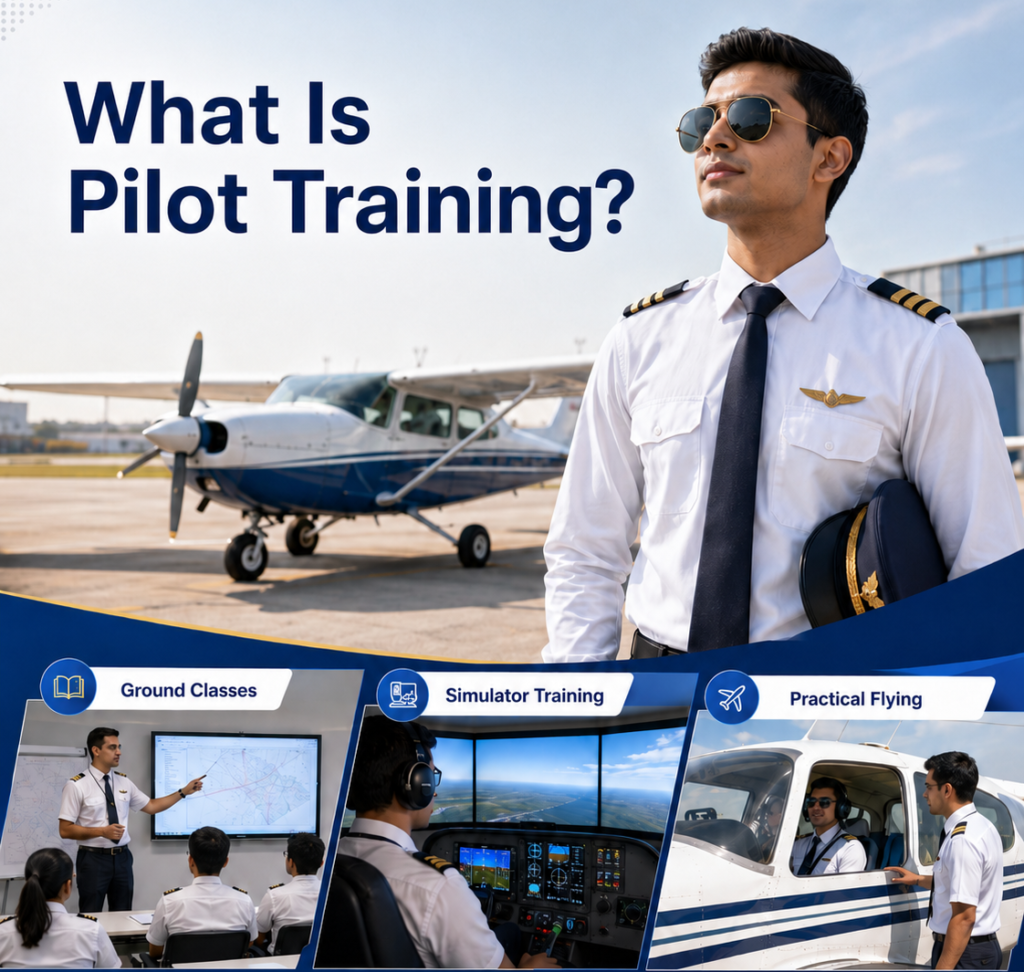
A complete pilot training programme combines ground classes and flight training to prepare students for licensing examinations and professional flying careers.
Students in India complete pilot training through DGCA-approved Flying Training Organisations (FTOs), which provide structured flight training programmes aligned with aviation regulations and licensing requirements.
Vision Flying Training Institute (VFTI) is among the top pilot training institutes in India, offering professional pilot training designed to help aspiring aviators build the skills, knowledge, and confidence required for a successful aviation career.
Types of Pilot Training Courses in India
Students can choose different pilot licences depending on their career goals.
The two most common pilot training courses are:
- Private Pilot Licence (PPL)
- Commercial Pilot Licence (CPL)
PPL (Private Pilot Licence)
A Private Pilot Licence allows a person to fly aircraft for personal and recreational purposes. A PPL holder cannot work as a commercial airline pilot or earn money by flying passengers.
PPL is often chosen by individuals who want to experience aviation without pursuing a professional airline career.
CPL (Commercial Pilot Licence)
A Commercial Pilot Licence is the primary licence required for candidates who want to become professional pilots.
A CPL allows pilots to work in commercial aviation, subject to meeting airline and operator requirements.
Commercial pilots may work with:
- Airlines
- Charter operators
- Cargo companies
- Aviation organisations
- Flight training institutions (after obtaining required instructor qualifications)
DGCA-approved CPL programmes at Vision Flying Training Institute (VFTI) are structured to meet the regulatory requirements for obtaining a Commercial Pilot Licence (CPL).
The course combines comprehensive ground training, practical flight training, and aviation-focused learning to help aspiring pilots develop the knowledge and skills required to pursue a professional flying career.
Difference Between PPL and CPL
| Feature | PPL | CPL |
| Full Form | Private Pilot Licence | Commercial Pilot Licence |
| Main Purpose | Personal flying | Professional flying career |
| Can Fly Commercially | No | Yes |
| Airline Career | Not applicable | Required pathway |
| Training Level | Basic | Advanced |
| Career Scope | Limited | Wider aviation opportunities |
If your goal is to become an airline pilot in India, CPL training is the correct career pathway.
Pilot Training Eligibility Requirements in India
The eligibility criteria for pilot training depend on the licence type and regulatory requirements.
CPL Eligibility Requirements
Candidates pursuing a Commercial Pilot Licence (CPL) in India must fulfil the following eligibility requirements:
- Minimum Education: Class 12 or equivalent qualification from a recognised board.
- Subjects Required: Physics, Mathematics, and English as per DGCA eligibility requirements.
- Age Requirement: Minimum 17 years of age to begin the CPL training pathway.
- Medical Fitness: Valid DGCA-approved medical certification is required.
- Training Organisation: CPL training must be completed through a DGCA-approved Flying Training Organisation (FTO).
How To Become A Pilot In India After The 12th?
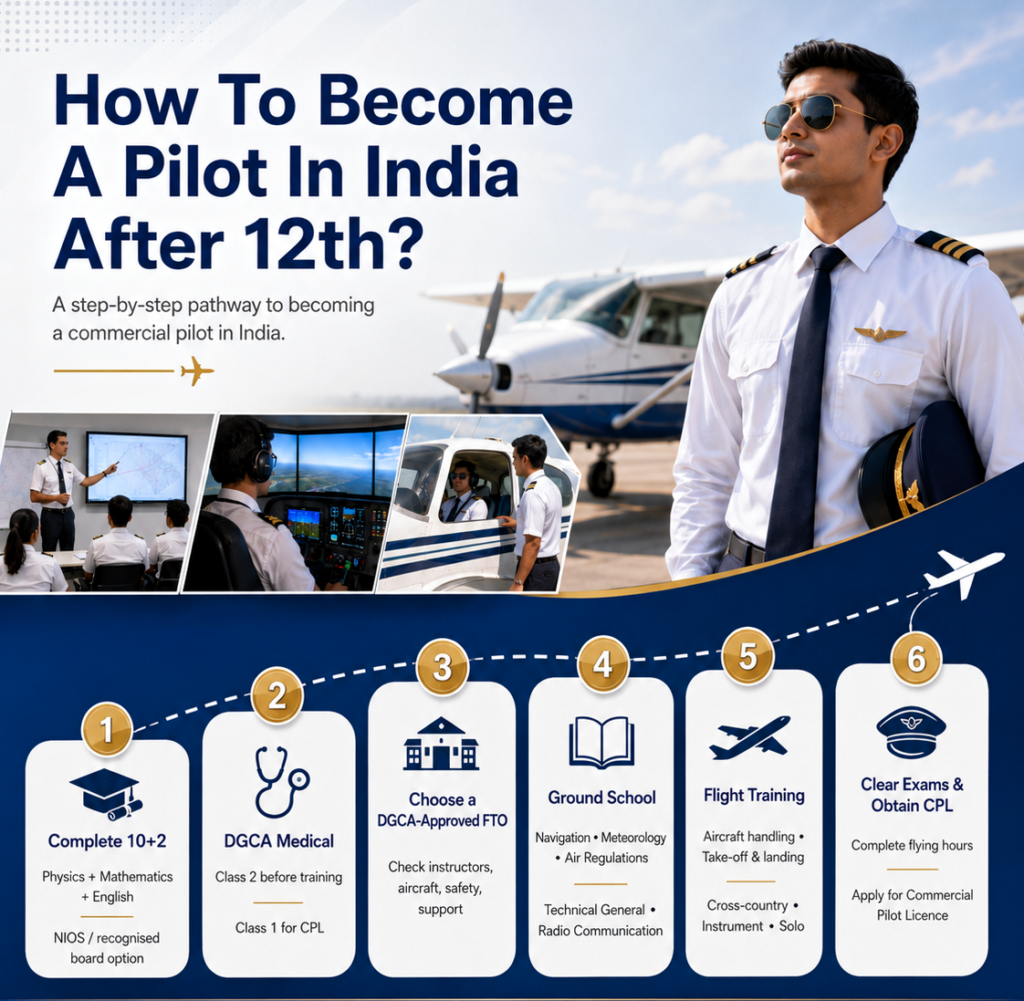
Many students begin their pilot journey immediately after completing Class 12.
Becoming a commercial pilot requires a structured approach that combines academic qualifications, medical fitness, theoretical knowledge, and practical flight experience. The journey from an aviation aspirant to a licensed commercial pilot involves completing DGCA requirements and gaining the necessary skills through professional flight training.
The general pathway to become a pilot in India includes the following steps:
Stage 1: Complete 10+2 Education with Physics and Mathematics
The first step towards becoming a pilot is completing Class 12 education from a recognised board.
Candidates pursuing a Commercial Pilot Licence (CPL) must generally have Physics and Mathematics as subjects in Class 12 along with English proficiency.
A strong foundation in these subjects helps students understand important aviation concepts such as aircraft performance, navigation, aerodynamics, and flight operations.
Students who do not have Physics and Mathematics in Class 12 may complete these subjects through NIOS (National Institute of Open Schooling) or other recognised education boards. Completing the required subjects through a recognised board helps candidates fulfil the academic eligibility criteria for CPL training.
Stage 2: DGCA Medical Examination
The DGCA pilot medical test is a mandatory requirement before beginning professional pilot training.
Aspiring pilots must complete DGCA Class 2 Medical Examination before starting flight training and DGCA Class 1 Medical Examination for CPL requirements
Completing medical certification at an early stage helps students confirm their eligibility before investing significant time and resources into pilot training.
Stage 3: Choose a DGCA-Approved Flying Training Organisation (FTO)
Selecting the right flying school is one of the most important decisions in a pilot’s career journey.
Candidates should choose a DGCA-approved Flying Training Organisation (FTO) in aviation that provides structured CPL training according to regulatory standards.
While selecting a flying institute, students should consider:
- DGCA approval and training standards
- Experienced flight instructors
- Aircraft availability and maintenance standards
- Safety-focused training environment
- Quality of ground school preparation
- Student guidance and career support
Vision Flying Training Institute (VFTI) is among the top pilot flying training institutes in India, providing structured CPL training with a focus on professional aviation skills, safety, and career preparation.
Stage 4: Complete Ground School Training
Before entering the cockpit, students must develop a strong understanding of aviation theory through ground classes.
CPL ground training covers important subjects, including:
- Air Navigation
- Aviation Meteorology
- Air Regulations
- Technical General
- Radio Navigation and Communication
This theoretical knowledge prepares students for DGCA examinations and helps them understand aircraft systems, flight planning, weather conditions, and operational procedures.
Stage 5: Complete Flight Training and Build Flying Experience
After completing the required theoretical training, students begin practical flight training under experienced flight instructors.
Flight training focuses on developing essential pilot skills, including:
- Aircraft familiarisation
- Basic aircraft handling
- Take-off and landing techniques
- Circuit flying
- Cross-country navigation flights
- Instrument flying
- Emergency handling procedures
- Solo flying experience
At VFTI, students receive structured flight training designed to gradually build confidence, technical ability, and professional flying skills.
Stage 6: Clear DGCA Examinations and Obtain CPL
After completing the required flying hours, examinations, and regulatory requirements, candidates can apply for their Commercial Pilot Licence (CPL) from DGCA.
A CPL allows pilots to pursue professional aviation opportunities. CPL pilot training is the foundation for candidates who aspire to build a long-term career as a professional pilot.
What Does CPL Training Include?
A Commercial Pilot Licence (CPL) training programme is designed to develop the theoretical knowledge, technical skills, and practical flying experience required to become a professional pilot. The training is divided into multiple stages, including ground classes, flight training, simulator sessions, and DGCA examinations.
- Ground School Training
Ground school builds the theoretical foundation required for safe and professional flying. Students learn key aviation subjects such as Air Navigation, Aviation Meteorology, Aircraft Technical Knowledge, Air Regulations, and Radio Communication.
This knowledge helps aspiring pilots understand aircraft operations, flight planning, weather conditions, and aviation procedures while preparing for DGCA examinations.
- Flight Training
Flight training allows students to apply their theoretical knowledge in real aircraft operations under the guidance of qualified flight instructors. Students learn aircraft handling through practical flying sessions.
- Simulator Training
Simulator training provides a controlled environment where students can practise cockpit procedures, decision-making, and emergency scenarios before experiencing them in actual flight conditions.
It helps improve situational awareness, confidence, and overall flight safety.
- DGCA Examinations
Students must clear required DGCA examinations before obtaining their licence.
How Much Does Pilot Training Cost in India?
The pilot course fee is a significant investment because it includes aircraft operation, instructor fees, examinations, simulator sessions, and other aviation-related expenses.
A typical CPL training programme in India may cost approximately ₹35 lakh to ₹60 lakh or more, depending on the flying school, aircraft type, training structure, flying hours, location, and additional requirements such as simulator training, accommodation, and other associated expenses.
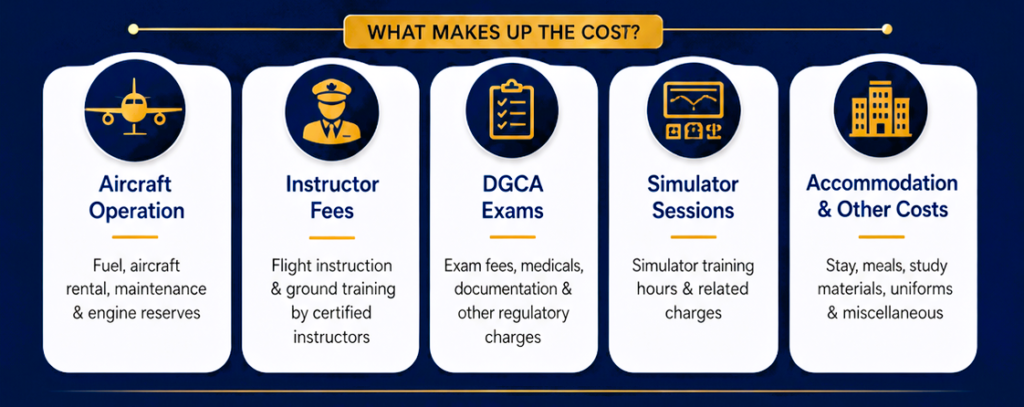
The exact cost may vary between institutes based on the facilities and services included in the programme.
How Long Does It Take To Become A Pilot?
A Commercial Pilot Licence (CPL) programme in India generally takes around 18 to 24 months to complete when pursued through a structured training programme.
The actual completion timeline may vary depending on factors such as:
- Weather conditions affecting flight operations
- Aircraft availability and maintenance schedules
- Student performance and learning pace
- Instructor availability
- Training consistency and scheduling
A well-planned training programme with regular flying sessions helps students complete their CPL journey efficiently and progress towards their professional aviation goals.
Vision Flying Training Institute (VFTI) has its training base in Gujarat, a location known for favourable weather conditions that support consistent flying operations throughout the year.
Our institute provides a suitable training environment with the necessary infrastructure, aircraft facilities, and professional guidance to help students complete their flight training effectively and progress towards their CPL goals.
Career Opportunities After CPL Training
After completing a Commercial Pilot Licence (CPL), pilots can explore various career opportunities in the aviation industry, including:
- Airline First Officer: Join commercial airlines as a First Officer after completing required airline assessments and additional training.
- Charter Pilot: Fly private and business aircraft with charter operators.
- Cargo Pilot: Operate cargo aircraft for aviation and logistics companies.
- Flight Instructor: Train future pilots after obtaining the required instructor qualifications.
- Aviation Operations: Explore roles in aviation management, flight operations, and related fields.
Is Pilot Training Worth the Investment in India?
Since CPL training involves a significant investment, many aspiring pilots and parents want to understand whether pursuing pilot training is a worthwhile career choice.
Pilot training can be a rewarding investment for students who are passionate about aviation and committed to building a professional flying career. With the growth of the Indian aviation sector and increasing demand for skilled pilots, qualified commercial pilots have opportunities to work with airlines, charter operators, and other aviation organisations.
Aviation is also considered an attractive career option due to the earning potential of professional pilots. The salary of a pilot can increase significantly with experience, aircraft type, and airline. Experienced pilots, especially those flying larger commercial aircraft, can earn competitive salaries while enjoying a respected and rewarding career.
However, CPL training is only the beginning of the journey. Choosing the right DGCA-approved flying school, gaining quality flight experience, and developing strong aviation skills play an important role in long-term career success.
Why Choose Vision Flying Training Institute for Pilot Training in India?
Vision Flying Training Institute (VFTI) is a DGCA-approved Flying Training Organisation (FTO) located at Amreli Airport, Gujarat. It is one of the best pilot training colleges in Gujarat, providing aspiring pilots with structured pilot course training in India.
Students choosing VFTI for pilot training benefit from:
- DGCA-Approved CPL Training Programme: A structured pathway covering ground school, flight training, and the required flying experience to pursue a Commercial Pilot Licence.
- Strategic Training Base in Gujarat: VFTI’s airbase at Amreli Airport offers favourable weather conditions, clear skies, and less congested airspace, supporting consistent flying practice throughout the year.
- Modern Aircraft Fleet: Students receive flight training on modern training aircraft, including Tecnam P2008 JC, Cessna 172 Skyhawk, and Tecnam P-Mentor, equipped with advanced glass cockpit avionics such as Garmin G1000 and G3X Touch systems.
- Experienced Aviation Instructors: Professional guidance from trained instructors helps students develop essential flying skills.
- Integrated Learning Approach: VFTI combines classroom learning, practical flying, simulator training, and career preparation to create a complete pilot training experience.
- Campus-Based Training Environment: Students can focus on their aviation journey with training facilities, boarding, and lodging support available at the Amreli, Gujarat airbase.
- Career-Oriented Preparation: VFTI provides airline preparation support, including interview guidance, simulator preparation, and career assistance to help students progress towards professional aviation opportunities.
VFTI provides aspiring pilots with the foundation needed to build a successful career in aviation.
Conclusion
Becoming a pilot is a journey that requires the right training, dedication, and professional guidance.
The aviation industry is continuing to grow, creating demand for skilled and well-trained pilots. With the right training pathway and professional guidance, your passion for flying can become a rewarding career as a pilot.
Contact Vision Flying Training Institute today and take the first step towards your career in the skies.
Call: +91 9319193602, +91 9319193605
Email: enquiry@vfti.in
Enquire now and begin your pilot training journey with VFTI.