
![How to Apply for Pilot Training in India: Guide [2027]](https://blog.vfti.co.in/wp-content/uploads/2026/09/t1.png)
How to Apply for Pilot Training in India: Guide [2027]
pgvisav@gmail.com
September 4, 2026
•11 min read
Becoming a commercial pilot is a career goal for many students in India. However, for many aspiring pilots, the biggest challenge is understanding the correct process to achieve it.
Questions like:
- Can I become a pilot after Class 12?
- What qualifications are required for pilot training in India?
- How much does CPL training cost?
- Which flying school should I choose?
- How long does it take to become a commercial pilot?
are common among students and parents planning an aviation career.
The process of becoming a pilot in India is structured and regulated by the Directorate General of Civil Aviation (DGCA), the regulatory authority responsible for civil aviation safety and licensing in India. Candidates must complete specific eligibility requirements, medical examinations, theoretical training, flying hours, and DGCA examinations before obtaining a Commercial Pilot Licence (CPL) in India.
Choosing the right flying school is one of the most important decisions in this journey. A good DGCA-approved Flying Training Organisation (FTO) provides structured training, experienced instructors, aircraft availability, safety-focused operations, and proper guidance throughout the licensing process.
This guide explains how to apply for pilot training in India in 2026. It covers every important step, from checking eligibility requirements to completing CPL training and beginning your aviation career.
Key Steps to Follow When Applying for Pilot Training in India
The process of becoming a commercial pilot in India follows a structured pathway that combines academic eligibility, medical fitness, theoretical knowledge, and practical flight training.
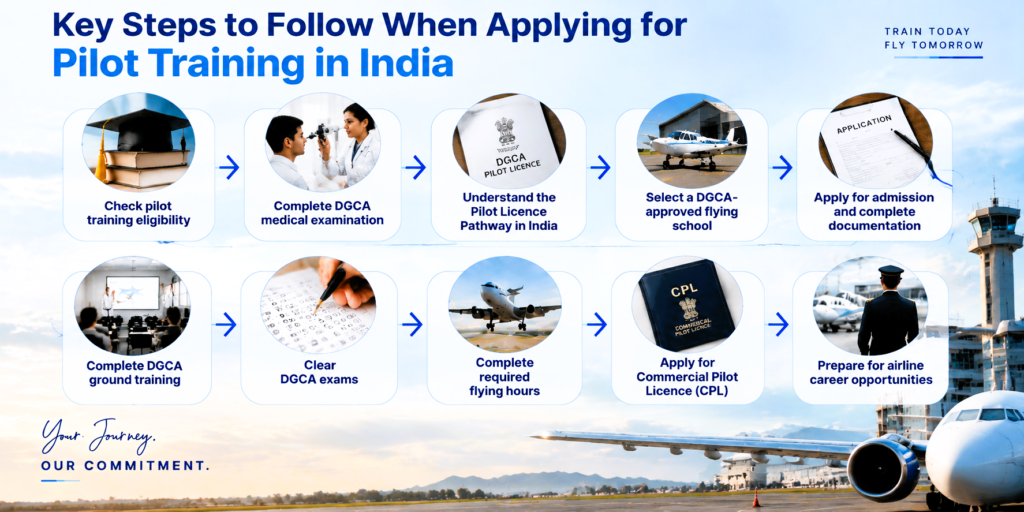
The following steps provide proper guidance on the pilot training process in India.
- Check pilot training eligibility
- Complete DGCA medical examination
- Understand the Pilot Licence Pathway in India
- Select a DGCA-approved flying school
- Apply for admission and complete documentation
- Complete DGCA ground training
- Clear DGCA exams
- Complete required flying hours
- Apply for Commercial Pilot Licence (CPL)
- Prepare for airline career opportunities
Step 1: Check Your Eligibility for Pilot Training in India
Before applying to any flying school, candidates should first confirm whether they meet the basic eligibility requirements for commercial pilot training.
The DGCA has defined specific criteria related to age, education, medical fitness, and documentation.
| Requirement | Details |
| Minimum Age | 17 years to begin flight training |
| Education | 10+2 or equivalent qualification |
| Subjects Required | Physics and Mathematics |
| Medical Fitness | DGCA-approved medical assessment |
| Language Requirement | Ability to read, write, and communicate in English |
Educational Qualification Required for Pilot Training
Candidates applying for CPL training in India must meet the following requirements:
- Passed Class 12 (10+2) or equivalent examination
- Studied Physics and Mathematics as compulsory subjects
Students who did not have Physics and Mathematics in Class 12 can complete these subjects separately through recognised boards such as NIOS before applying for CPL training.
Why Are Physics and Mathematics Important Eligibility Requirements for Pilot Training?
Pilot training involves technical subjects such as:
- Aircraft performance
- Navigation calculations
- Weather interpretation
- Flight planning
- Aviation principles
A basic understanding of mathematics and physics helps students understand these concepts effectively during their pilot training.
Step 2: Complete DGCA Medical Examination Before Starting Training
Medical fitness is one of the most important requirements for becoming a pilot.
Many students make the mistake of investing significant time and money into their preparation without completing their medical assessment first.
Completing the DGCA-approved medical tests at an early stage helps candidates understand whether they meet aviation fitness standards before beginning professional training.
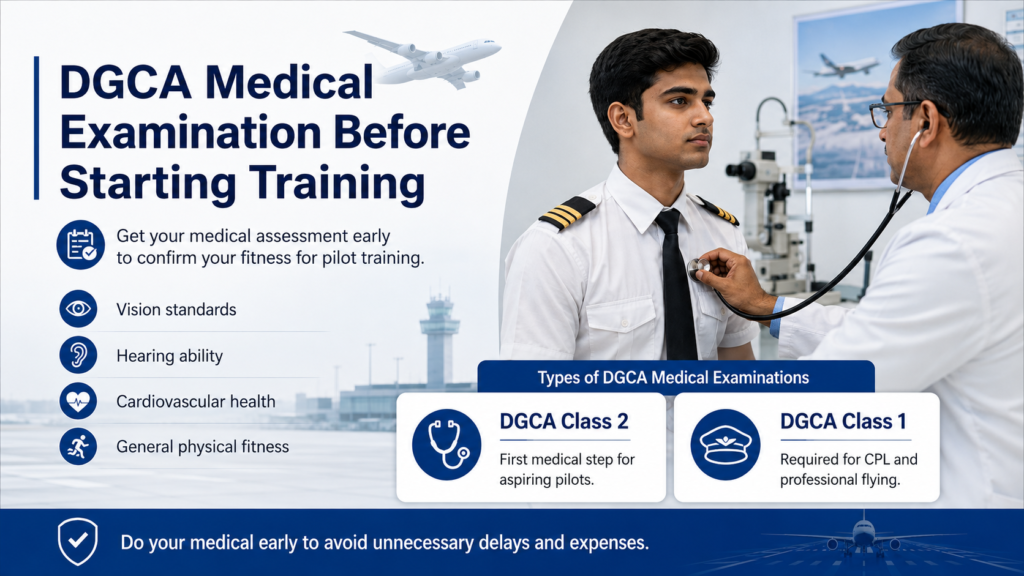
Types of DGCA Medical Examinations for Pilots
DGCA Class 2 Medical Examination
Class 2 medical is generally the first medical assessment completed by aspiring pilots.
It confirms that a candidate meets the basic health requirements necessary to begin flight training.
DGCA Class 1 Medical Examination
Class 1 medical certification is required for commercial pilots who want to obtain their CPL and work professionally.
The examination evaluates several health parameters, including:
- Vision standards
- Hearing ability
- Cardiovascular health
- General physical fitness
- Overall medical suitability for aviation duties
Candidates should always complete their medical assessment through a DGCA-approved medical examiner.
Aspiring pilots should complete their DGCA Class 1 Medical Examination before starting their pilot training. This is a smart step to make sure that they meet the required medical standards for obtaining a Commercial Pilot Licence (CPL).
Since flight training involves a significant investment of time and money, completing the medical assessment at the beginning helps candidates avoid unnecessary expenses and ensures they can confidently continue their journey toward becoming a professional pilot.
Step 3: Understand the Pilot Licence Pathway in India
Before selecting a flying school, students should understand the different pilot training courses available.
Types of Pilot Training Courses in India
Pilot training courses in India follow a structured licensing system regulated by the Directorate General of Civil Aviation (DGCA). Each licence represents a different stage of a pilot’s development and is designed for a specific purpose. Understanding these licences helps aspiring pilots choose the right training pathway based on their career goals.
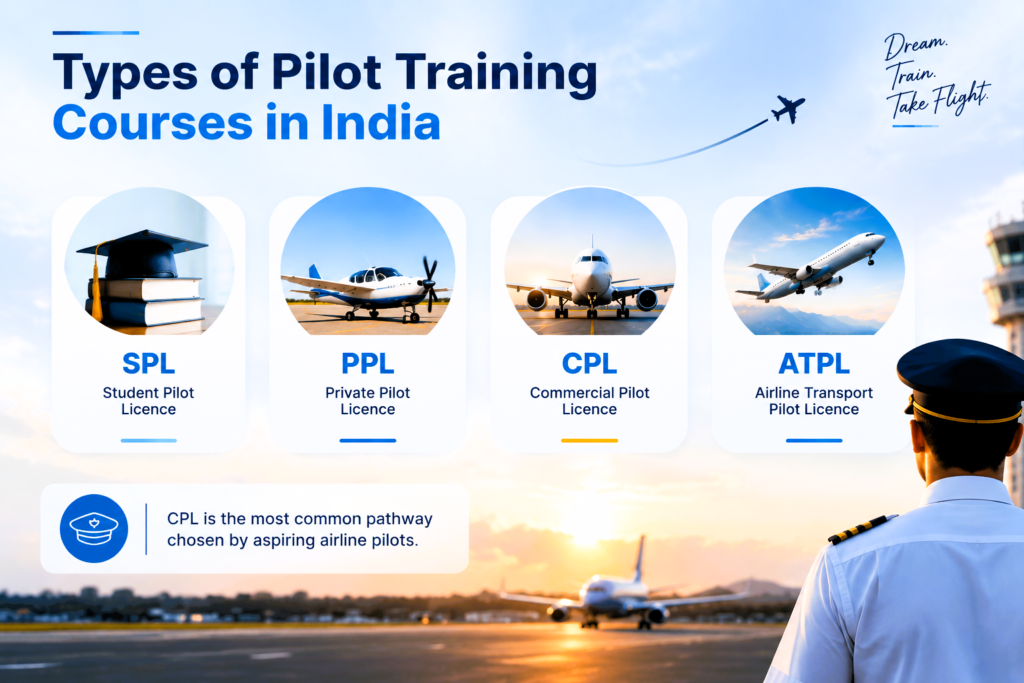
The major pilot training licences in India include:
- Student Pilot Licence (SPL)
- Private Pilot Licence (PPL)
- Commercial Pilot Licence (CPL)
- Airline Transport Pilot Licence (ATPL)
Among these licences, the Commercial Pilot Licence (CPL) is the most common pathway chosen by aspiring airline pilots. Completing CPL training allows candidates to meet the required qualifications and build the foundation needed to pursue a professional flying career.
Step 4: Choose the Right DGCA Approved Flying School
Selecting the right flying school is one of the most important decisions an aspiring pilot will make. The institute you choose plays a major role in shaping your training experience, flying skills, and overall journey toward obtaining a Commercial Pilot Licence (CPL).
Factors such as training quality, aircraft availability, instructor experience, maintenance standards, student support, and operational efficiency directly impact how smoothly and quickly a student can complete their CPL training.
While comparing flying schools, students should not make their decision based only on the course fees. A school offering lower fees may not always provide the best value if it has limited aircraft availability, longer waiting periods, or delays in completing required flying hours. These factors can increase both the overall training duration and the total cost of becoming a pilot.
Vision Flying Training Institute (VFTI) is among the best flying institutes for pilot training in India, offering structured pilot training programs designed for students who want to build a professional aviation career.
Step 5: Apply for Admission to a DGCA-Approved Flying School
Once you have confirmed your eligibility and selected a suitable flying school, the next step is to complete the admission process.
Every flying school may have a slightly different admission procedure, but the overall process generally includes document verification, medical clearance, registration formalities, and student onboarding.
A professional flying school will guide students through the documentation process and explain the complete training roadmap before they begin their classes.
How to Apply for Pilot Training Admission at VFTI
The admission process at VFTI begins with an enquiry and eligibility assessment. Students interested in starting their pilot training journey can connect with the admissions team to understand the course structure, eligibility requirements, and next steps.
The general admission process includes:
- Submit an enquiry through the VFTI admission form or contact the admissions team
- Qualifying eligibility requirements
- Complete the required DGCA medical assessment
- Submit the required documents for verification
- Complete admission formalities and begin your pilot training program
VFTI provides guidance to aspiring pilots throughout the admission process, helping students understand the requirements before starting their CPL journey.
Step 6: Complete DGCA Ground School Training
Flying an aircraft requires more than practical flying skills. Before entering the cockpit, pilots must understand aviation theory, regulations, aircraft systems, weather conditions, navigation procedures, and communication standards.
This classroom-based learning is known as ground school training.
During ground classes, students develop the technical knowledge required to safely operate an aircraft and clear DGCA examinations.
Step 7: Clear DGCA Pilot Examinations
After completing ground training, students must clear the required DGCA examinations.
These examinations test whether a candidate has sufficient theoretical knowledge to operate aircraft safely.
Step 8: Begin Flight Training and Build Flying Experience
After completing the required initial training stages, students begin practical flight training.
This is the stage where classroom knowledge is applied in real aircraft operations under the supervision of qualified flight instructors.
Flight training gradually progresses from basic aircraft handling to advanced flying skills required for commercial aviation.
Step 9: Apply for Commercial Pilot Licence (CPL)
After completing all DGCA requirements, including examinations and flight training, candidates can apply for their Commercial Pilot Licence.
The CPL is the professional licence that allows pilots to pursue commercial aviation opportunities.
After obtaining a CPL, pilots may explore careers such as:
- Airline pilot
- Charter pilot
- Corporate aviation pilot
- Flight instructor
- Aviation operations roles
However, CPL is not the final step for airline employment. Airlines usually conduct their own selection process.
How Long Does It Take to Become a Pilot in India?
The duration of pilot training varies depending on the student’s progress and the operational capability of the flying school.
On average, students may complete their CPL training within approximately 18 to 24 months.
Factors that can affect completion time include:
- Weather interruptions
- Aircraft maintenance schedules
- Student availability
- Flying frequency
- Examination preparation
Students should choose the right Flying Training Organisation that focuses not only on admission numbers but also on timely training completion.
Skills That Help Pilots Build a Successful Aviation Career
A pilot’s career depends on much more than technical flying ability. Successful pilots develop a combination of technical knowledge, professional discipline, and personal skills that help them handle complex aviation situations safely and effectively.
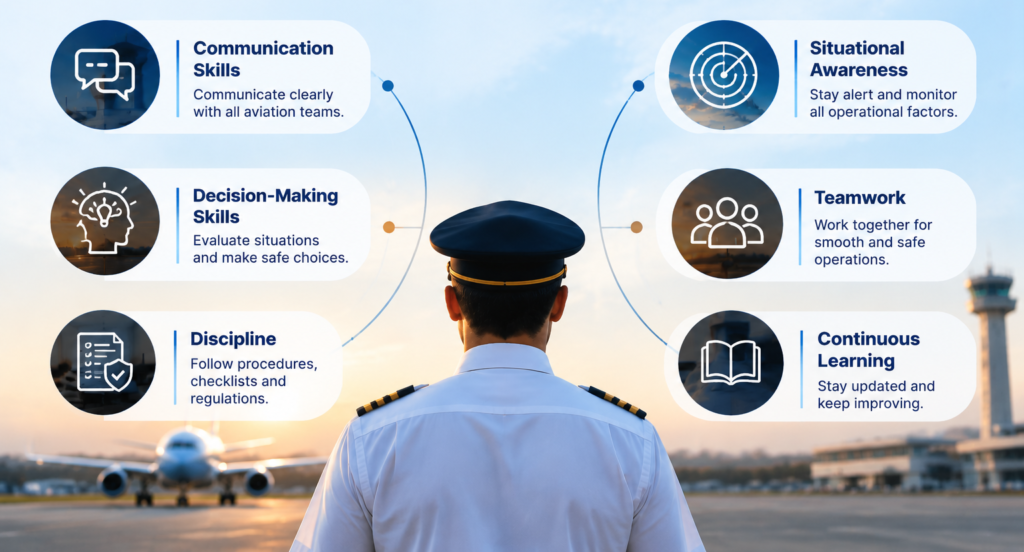
Key skills every successful pilot should develop include:
- Communication Skills: Pilots must communicate clearly and effectively with co-pilots, cabin crew, air traffic controllers (ATC), and ground teams to ensure safe flight operations.
- Decision-Making Skills: Pilots need strong decision-making abilities to evaluate situations, manage risks, and make safe choices during normal and unexpected flight conditions.
- Discipline: Aviation requires strict adherence to procedures, checklists, safety protocols, and regulations. Professional discipline is essential for maintaining flight safety.
- Situational Awareness: Pilots must continuously monitor their surroundings, aircraft performance, weather conditions, and operational factors to make informed decisions.
- Teamwork: Pilots work closely with flight crew, air traffic controllers, engineers, and aviation professionals. Strong teamwork ensures smooth and safe operations.
- Continuous Learning: Aviation technology, regulations, and procedures continue to evolve. Successful pilots stay updated and continue improving their knowledge and skills.
A strong foundation during pilot training helps students develop these professional qualities early and prepares them for the responsibilities of a commercial aviation career.
Learn more about the essential skills required to build a successful aviation career in our detailed blog: “What Skills Do Pilots Need to Get Hired as a Pilot?”
Why Vision Flying Training Institute (VFTI) is a Preferred Choice for Pilot Training in India
Vision Flying Training Institute (VFTI) provides structured pilot training for students who want to build a professional aviation career. Located at Amreli Airport, Gujarat, VFTI offers an aviation-focused environment where students can concentrate on developing their flying skills and theoretical knowledge.
The following points should be taken into account regarding VFTI:
- VFTI follows DGCA-approved training standards to help students complete their pilot course according to Indian aviation requirements.
- VFTI provides training aircraft designed for student pilot development, including modern single-engine training aircraft.
- Students receive guidance throughout their pilot training journey.
- They focus on providing students with structured training and practical exposure needed to develop confidence as future aviation professionals.
Conclusion
Becoming a pilot in India requires planning, commitment, and choosing the right training pathway.
The process may seem complex at first, but when broken into clear steps, it becomes easier to understand.
Your journey from a student pilot to a professional aviator begins with choosing the right training partner.
Contact our admission consultants today!
Call: +91 9319193602, +91 9319193605
Email: enquiry@vfti.in
Vision Flying Training Institute helps aspiring pilots take that first step toward the cockpit.