
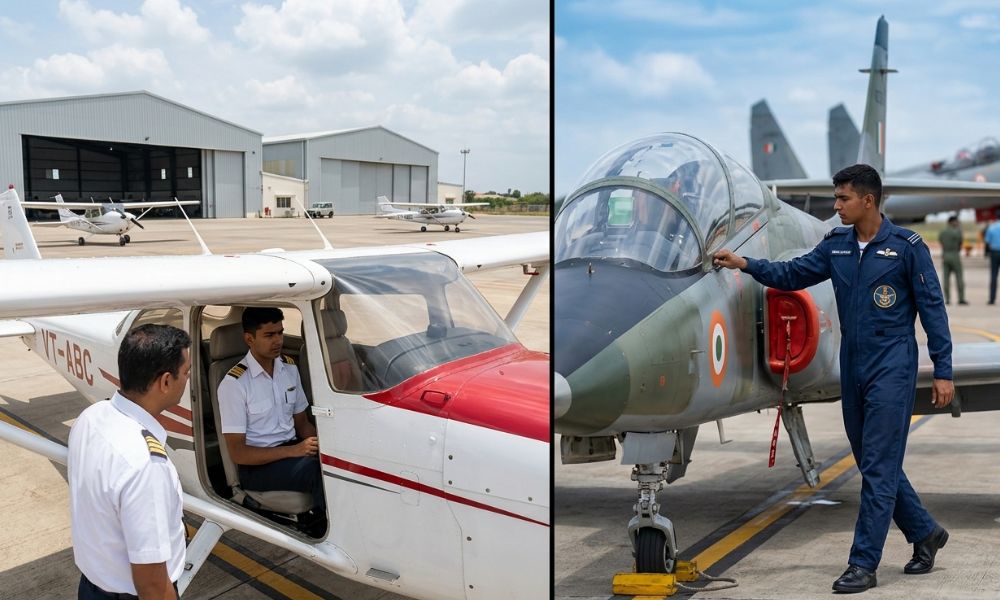
Flight School vs Air Force Pilot Training: Key Differences Explained
pgvisav@gmail.com
August 10, 2026
•7 min read
Pilot training is a dream for many students in India, but there are two fundamentally different paths to the cockpit: a civilian flight school or pilot training through the Indian Air Force. Understanding the key differences helps aspiring pilots determine which route aligns with their career goals, budget, lifestyle and personal interests.
Civilian flight schools primarily prepare students for careers in commercial aviation – airlines, charter services and private flying. The Indian Air Force trains pilots for military operations and national defence. Both routes command respect, but the training systems, costs, entry requirements and career commitments differ significantly.
India: Civilian Flight School Overview
Civilian aviation flight schools train individuals to fly aircraft within a structured regulatory framework. In India, students undergo ground school and the required flying hours at a Flying Training Organisation recognised by the Directorate General of Civil Aviation.
Training typically covers aircraft handling, navigation, meteorology, aviation law, radio communication, emergency procedures and flight planning. Most students work toward a Commercial Pilot Licence along with additional ratings required for professional aviation. Before selecting any school, it is worth comparing DGCA-approved flying institutes in India to understand what verified, well-structured organisations look like in terms of aircraft availability, instructor quality and course completion standards.
Civilian training offers one significant advantage: flexibility. Students can compare schools, evaluate costs, assess aircraft availability and choose a location that suits them. They also have more control over the pace at which they complete training.
Indian Air Force Pilot Training: What Is It?
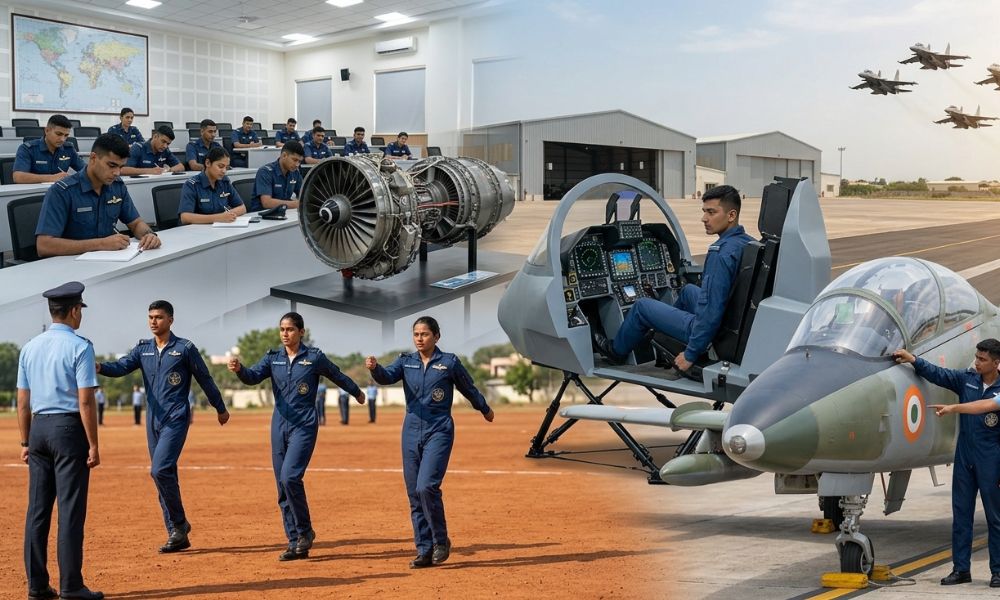
Indian Air Force pilot training is a military officer programme, not simply a flying curriculum. Candidates selected through the Air Force Common Admission Test and related processes undergo military, academic, physical and flying training as a combined programme.
The training teaches not only how to fly but also leadership, discipline, resilience, teamwork and decision-making under operational pressure. Air Force pilots may eventually fly advanced military aircraft on active missions. Anyone pursuing this route must have a genuine commitment to military service, not just an interest in flying.
Entry Requirements and Selection
Entry requirements represent one of the starkest differences between the two paths.
Civilian flight school admission follows a comparatively straightforward process. Students must satisfy educational qualifications, age criteria and DGCA medical eligibility requirements before beginning professional training.
Indian Air Force selection is far more competitive. Candidates are assessed on academic merit, aptitude, medical fitness, physical stamina, psychological profile, leadership qualities and communication skills. A strong academic record alone is insufficient. Candidates must also demonstrate discipline, confidence, problem-solving ability and composure under pressure.
Cost of Training
Cost is one of the most significant practical differences between the two paths.
Civilian pilot training in India involves a substantial personal financial commitment. Students typically pay for aircraft rental, instructor fees, examinations, simulator sessions, medical tests, study materials, accommodation and transport. A clear understanding of pilot course fees and what training actually costs in India is essential before committing to any programme, as the total expenditure is considerably higher than the advertised hourly rate suggests.
Air Force training operates differently. Selected candidates undergo training as part of their military service and do not pay standard civilian tuition fees. However, this does not mean the path is without cost. Candidates commit to military responsibilities, rigorous discipline, postings and defined service obligations.
The key distinction:
- Civilian flight school — students fund their own training and retain control over location and career choices
- Indian Air Force — training is part of military service, structured and less flexible, oriented toward defence and operational flying.
Training Style and Environment
Civilian flight schools are generally more adaptable. Students can schedule flights around budget, weather, instructor availability and aircraft access. The environment is professional but not militarised.
Air Force training is highly regimented. Trainees follow a structured daily programme combining military drills, physical conditioning, classroom instruction and flying assessments. The training goes beyond aircraft handling — it conditions pilots to make rapid, sound decisions in high-pressure operational environments.
How Training Intensity Differs
Civilian students work through theory examinations, navigation exercises, airmanship practice and skills tests. There is typically some flexibility to revisit exercises if additional practice is needed.
Air Force trainees simultaneously manage academic coursework, physical fitness requirements, simulator training, flying progression and military obligations. The pace is faster and expectations are higher, reflecting the operational demands of military aviation.
Both paths require genuine discipline, but military training consistently operates under greater pressure and imposes a more demanding lifestyle.
Aircraft Used During Training
Civilian students typically begin on light training aircraft, learning the fundamentals of takeoff, landing, navigation, stall recovery, radio communication and emergency procedures. Many progress to multi-engine aircraft and more advanced avionics in later stages.
Indian Air Force trainees eventually transition to advanced military aircraft with more complex systems, higher performance envelopes and demanding operational procedures. Both civilian and military pilots share the same foundational training principles, however, regardless of the aircraft they ultimately fly.
Lifestyle Differences
The lifestyle implications of each path are considerable and often underestimated.
Civilian pilots have significant freedom over where they work and train. Once qualified, they can pursue employment with airlines, charter operators, flight schools, cargo companies or corporate aviation organisations.
Air Force pilots have less autonomy over their location and duties. They may be posted to different bases, assigned specific roles or redeployed according to operational requirements.
Civilian training suits students who want flexibility and a direct route into commercial aviation. The Indian Air Force suits those who want to combine flying with military service and are comfortable with the structure and commitment that entails.
Career Paths After Civilian Flight School
Civilian pilots in India typically build experience progressively before becoming eligible for airline positions. Many begin as flight instructors, move into charter or corporate flying and eventually reach the airlines. For students whose primary goal is an airline career, civilian flight training is generally the more direct path.
That said, completing flight training does not guarantee employment. Airlines evaluate technical knowledge, how many flight hours a candidate has accumulated, medical fitness, communication skills and interview performance before making any offer.
Career Opportunities After Indian Air Force Training
Indian Air Force pilots serve in a highly disciplined and technically demanding operational environment. After completing their required service period, many military pilots transition to civilian aviation, bringing strong flying experience and professional credibility.
However, the Indian Air Force should not be viewed primarily as a pathway to an airline career. The principal commitment is military service, and career decisions are shaped by that obligation throughout the period of service.
Which Path Is Right for You?
There is no single correct answer.
Civilian flight school is typically better suited to students who want a commercial aviation career with flexibility over location, employer and career pace.
Indian Air Force pilot training is more appropriate for candidates who are drawn to military service, can meet the rigorous selection standards and are prepared for the discipline, postings and long-term service commitments involved.
Final Thoughts
The choice between civilian flight school and Indian Air Force pilot training comes down to personal goals, financial circumstances and lifestyle priorities.
Civilian flight schools offer flexibility and a clear route into commercial aviation, funded at personal expense. Military aviation provides structured professional training and operational flying experience, but comes with stringent selection criteria, disciplined living conditions and defined service obligations.
For most students targeting an airline career in India, civilian training is the more straightforward path. For those who want to combine flying with military service, the Indian Air Force offers a challenging and fulfilling alternative. Understanding what civilian pilots earn at each stage from CPL through to ATPL can help students assess whether the financial investment in civilian training aligns with their long-term career expectations before making a final decision.