
Simulation Training for Pilots: Benefits, Cost, & Real-World Accuracy
pgvisav@gmail.com
January 29, 2026
•11 min read
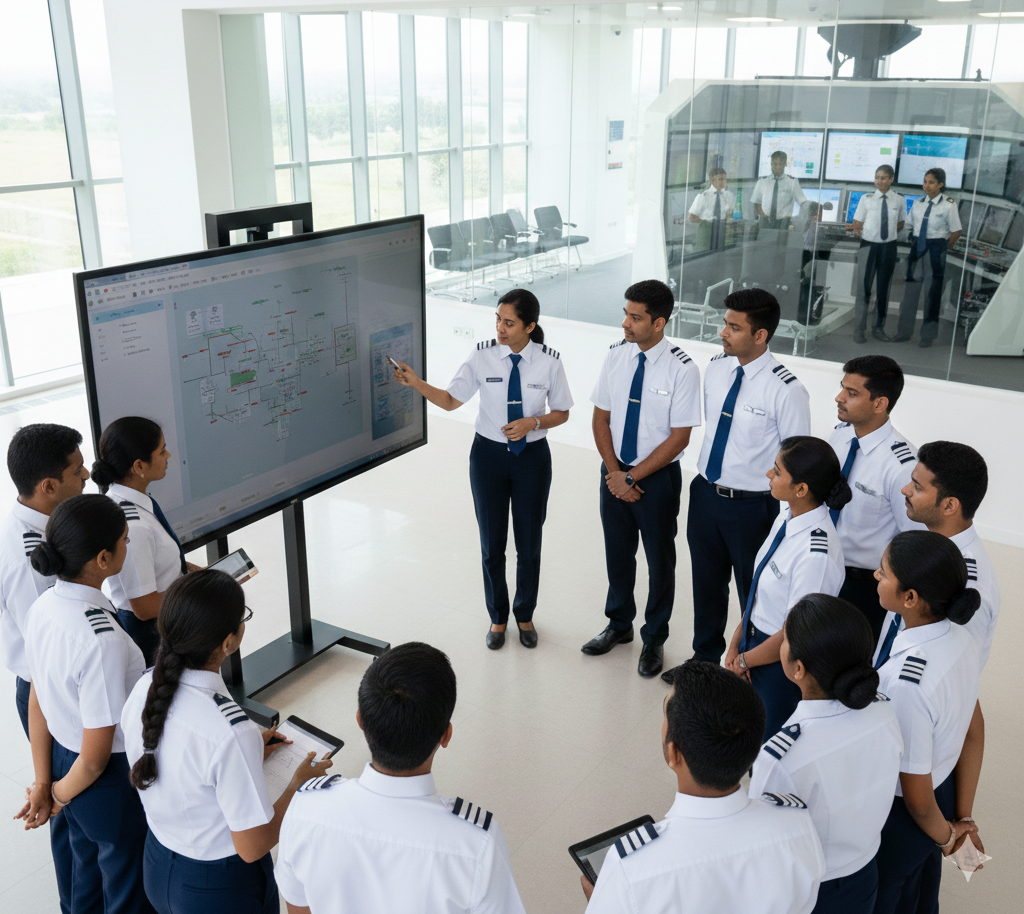
Simulation training has become a foundational element of modern pilot education rather than a supplementary tool. Across student pilot programs, commercial pilot license training, and airline preparation, simulators are used to develop cockpit discipline, procedural accuracy, and decision-making skills before pilots operate real aircraft.
For aspirants evaluating professional training options, choosing a DGCA-approved flight training institute in India such as VFTI (Vision Flying Training Institute) plays a critical role in how effectively simulation training is integrated into real-world flying. This article explains what simulation training involves, its practical benefits, cost considerations, and how accurately it reflects real-world flying conditions.
What Is Simulation Training for Pilots?
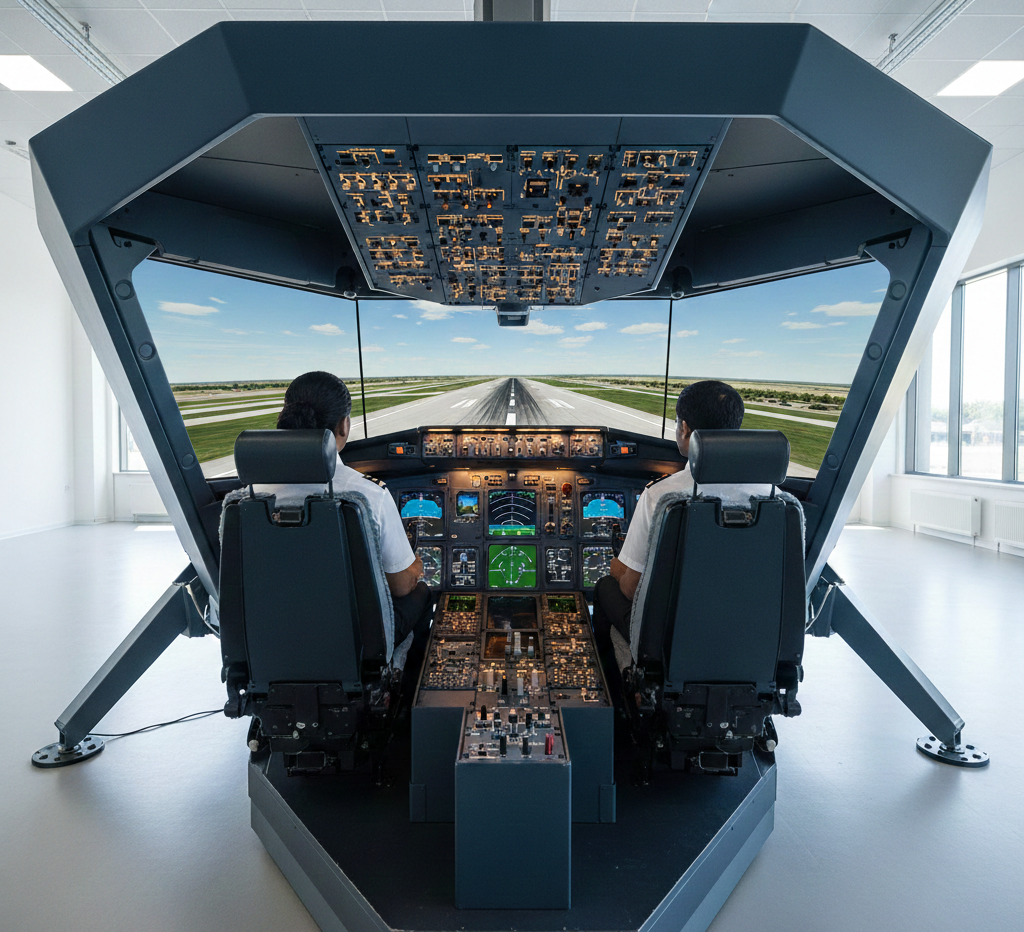
Simulation training for pilots uses certified flight simulation devices to replicate aircraft systems, cockpit layouts, flight dynamics, and operational environments. These devices allow pilots to practice normal operations, instrument procedures, and abnormal or emergency scenarios in a controlled, repeatable setting.
Simulation training is especially relevant for aspirants who are exploring becoming a pilot without Physics and want to understand cockpit procedures before flying real aircraft. Once eligibility requirements are met, simulators help candidates build cockpit familiarity, checklist discipline, and situational awareness early in their training.
Types of Flight Simulators Used in Pilot Training
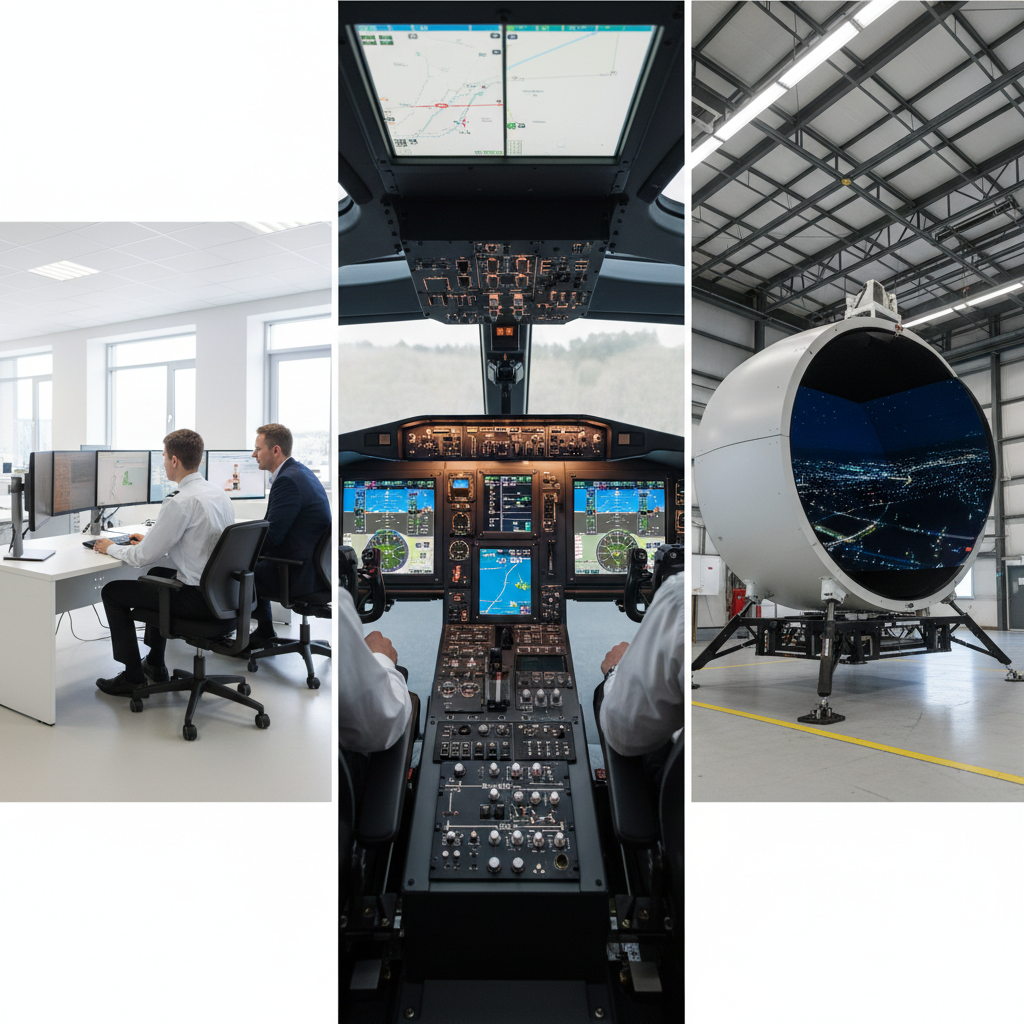
Basic Flight Training Devices
Basic training devices are commonly used during the initial stages of pilot training. They help students become familiar with cockpit layout, radio communication flow, checklist usage, and basic instrument scanning. While they do not replicate full aircraft physics, they are effective for building procedural confidence and reducing early training anxiety.
FNPT and Advanced Training Simulators
Flight and Navigation Procedure Trainers (FNPT) are used extensively during CPL and other training courses and instrument rating phases. These simulators replicate aircraft systems with higher accuracy, allowing pilots to practice IFR procedures, navigation, and abnormal situations. Approved FNPT devices are accepted by aviation authorities for logging specific portions of training time.
Full Flight Simulators
Full Flight Simulators offer the highest level of realism. They feature exact cockpit replicas, motion platforms, and high-resolution visual systems. These simulators are primarily used for airline training and type ratings, where procedural accuracy, crew coordination, and decision-making under pressure are critical.
Key Benefits of Simulation Training for Pilots
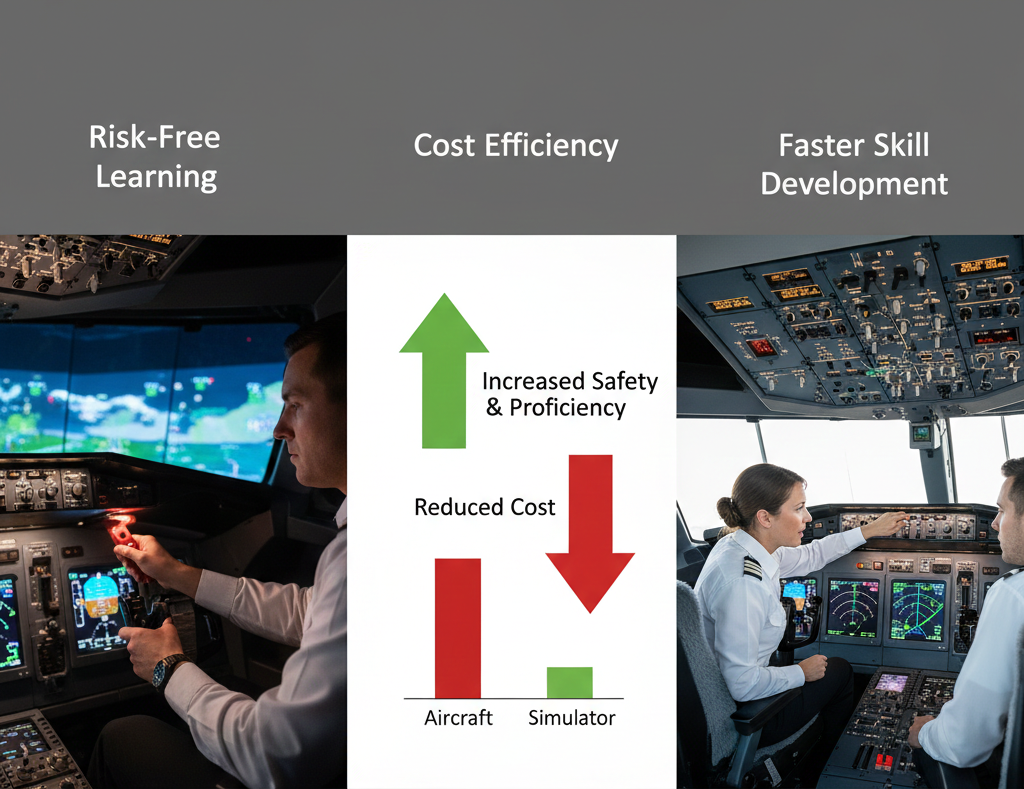
Simulation training offers advantages that are difficult or impractical to achieve consistently in real aircraft, particularly during early skill development and advanced procedural training.
Risk-Free Learning Environment
One of the most significant benefits of simulators is the ability to practice critical scenarios without physical risk. Engine failures, system malfunctions, severe weather encounters, and emergency descents can be trained repeatedly in a controlled environment.
This risk-free exposure is particularly beneficial for students entering aviation through alternative eligibility routes, including commerce-background students and beginners, as it allows them to build confidence before facing real-world operational pressure.
Cost Efficiency Compared to Aircraft Flying
Operating real aircraft involves fuel costs, maintenance, airport charges, and aircraft availability constraints. Simulators eliminate many of these expenses, allowing flight schools to deliver structured training at a lower cost per hour.
When evaluated alongside long-term career outcomes such as pilot salary in India, simulator-based learning helps reduce unnecessary repetition of expensive flight hours while maintaining training quality.
Faster Skill Development and Error Correction
Simulators allow instructors to pause sessions, repeat specific maneuvers, and correct errors immediately. This targeted training approach accelerates learning, particularly during instrument flying and procedural training, where repeating scenarios in real aircraft may not always be practical due to weather or operational limitations.
Exposure to Realistic Operational Scenarios
Pilots can train for conditions they may rarely encounter during routine flying, such as extreme weather, congested airspace, or complex system failures. This exposure improves situational awareness and prepares pilots for airline-style operational environments.
Understanding how effectively a school integrates such simulator-based scenarios is one of the key benchmarks when evaluating the best flying institutes in India.
How Accurate Is Simulation Training Compared to Real Flying?
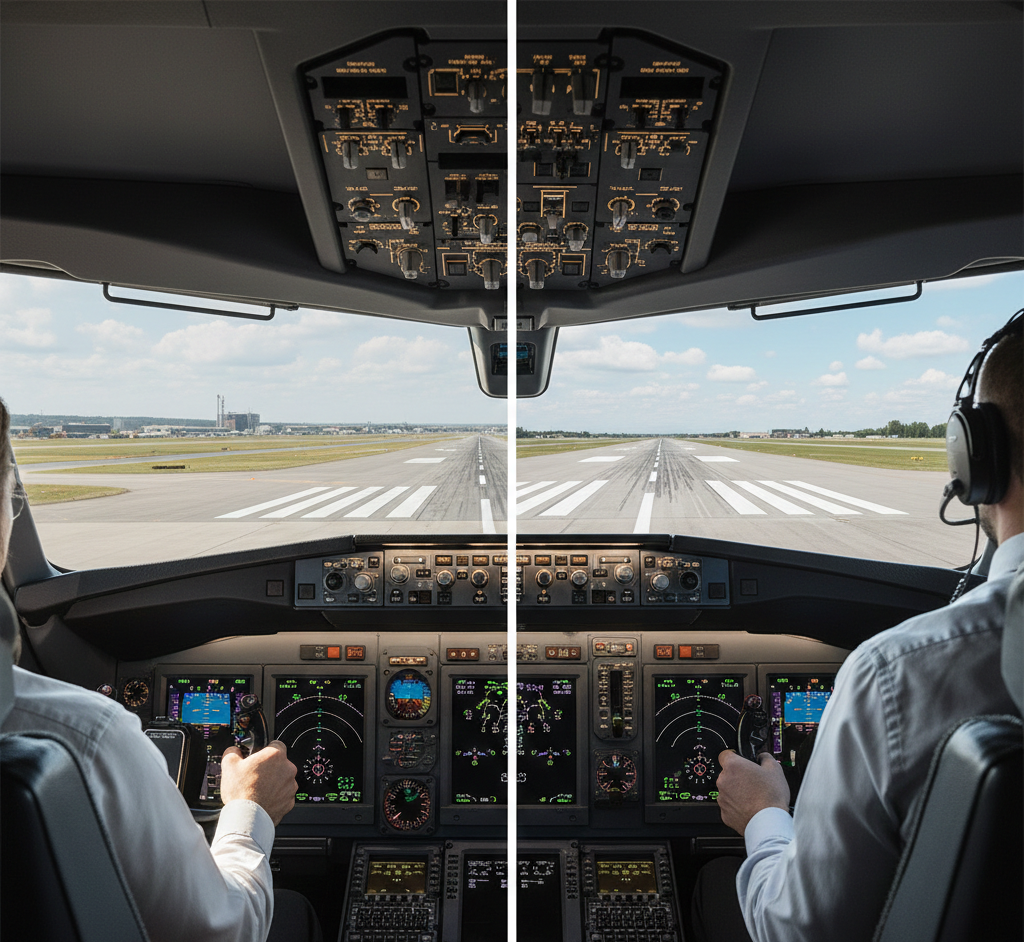
Modern certified simulators are developed using real aircraft performance data and manufacturer-approved system logic. Cockpit layouts, avionics behavior, and procedural workflows closely match real aircraft operations.
While simulators replicate procedural and systems-based flying with high accuracy, certain physical sensations such as prolonged G-forces and subtle aerodynamic feedback are approximated rather than fully duplicated. For this reason, simulation training is designed to complement real flying, not replace it entirely.
How do realistic flight simulators enhance pilot training?
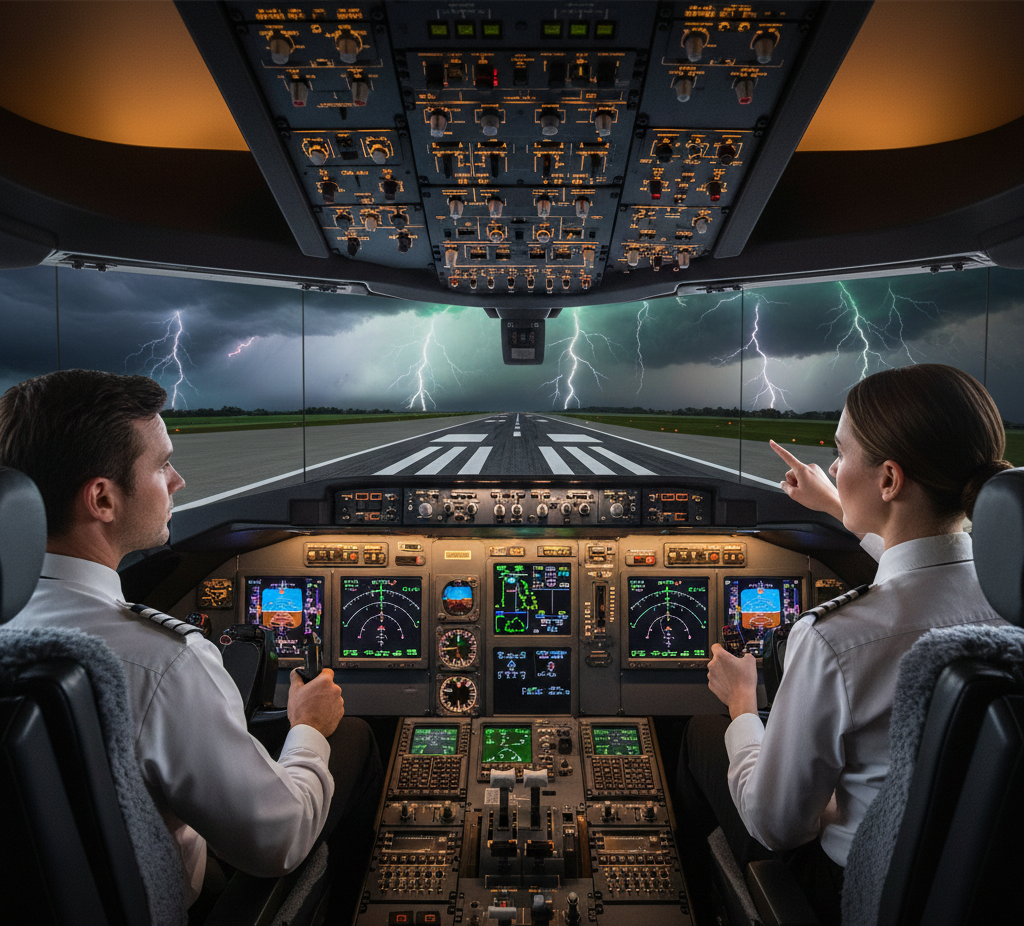
Realistic flight simulators transform pilot training through immersive scenario-based learning that would be impossible or dangerous in actual aircraft. Modern simulators recreate complex weather conditions, system failures, and emergency situations with precise accuracy, allowing pilots to experience and master challenging scenarios repeatedly without safety risks.
The flight training hours reduction achieved through high-fidelity simulation is particularly significant for advanced maneuvers and emergency procedures. Research demonstrates that simulator training effectively transfers skills to real-world flying while reducing the time needed for proficiency development.
These systems excel at standardizing training experiences across different instructors and locations, ensuring consistent skill development. The ability to pause, replay, and analyze specific moments enhances learning effectiveness compared to traditional flight training methods.
Role of Simulation Training in CPL and Airline Pilot Preparation
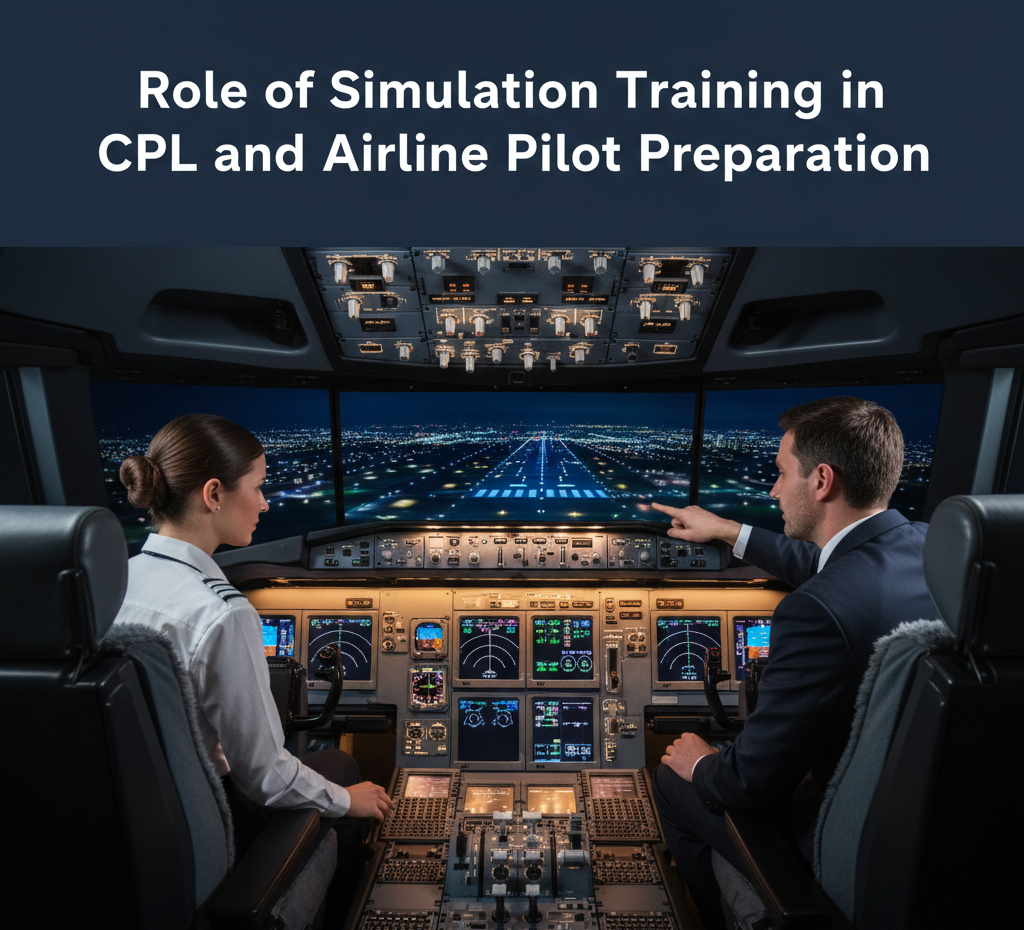
Simulation training plays a strategic role in commercial pilot license programs by preparing students for structured, airline-style operations. For women aspirants and students beginning aviation training after Class 12, simulators provide a controlled environment to build confidence before transitioning to complex aircraft operations.
This structured approach is particularly supportive for aspirants pursuing female pilot training in India, where early confidence, procedural accuracy, and decision-making skills are essential.
Airlines rely heavily on simulation training for type ratings, recurrent checks, and emergency preparedness. Pilots with strong simulator exposure adapt faster to airline SOPs and cockpit discipline.
Cost of Simulation Training for Pilots
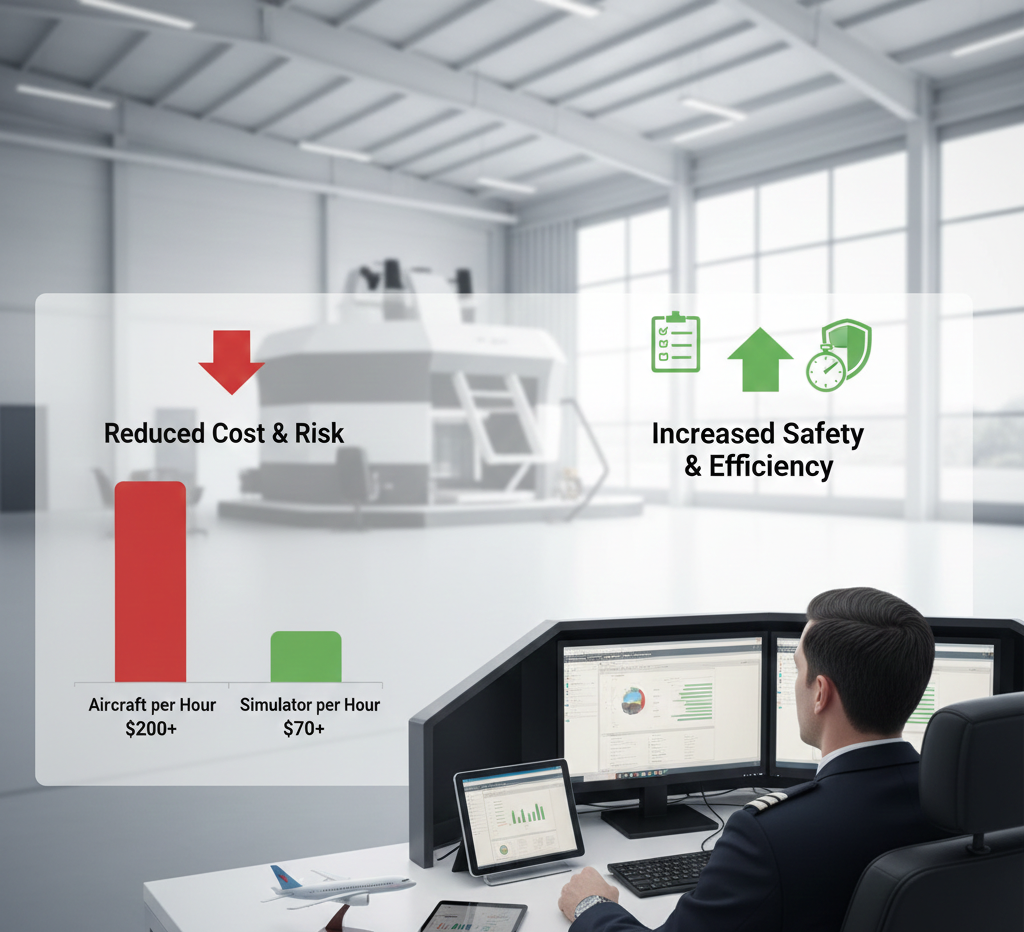
Flight simulation benefits extend far beyond skill development into substantial economic advantages for aviation training programs. Traditional flight training costs average $150-200 per hour for aircraft operation, fuel, and instructor fees, while high-fidelity simulators operate at approximately $50-75 per hour despite their multi-million dollar initial investment.
The economics become compelling when considering training volume and safety factors. Simulator-based training programs demonstrate significant cost reductions through eliminated fuel consumption, reduced aircraft maintenance, and minimized weather-related delays that plague traditional flight instruction.
Training organizations report 40-60% cost savings when incorporating simulation into their curricula, particularly for complex emergency procedures that would be prohibitively expensive or dangerous to practice in actual aircraft. These financial advantages position simulation training as an economically sustainable solution for addressing the aviation industry’s growing pilot shortage while maintaining rigorous safety standards.
Comparison Table: Simulation Training vs. Traditional Training
| Training Aspect | Simulation Training | Traditional Aircraft Training |
|---|---|---|
| Cost per Hour | $150-400 | $800-2,500+ |
| Safety Risk | Zero accident risk | Inherent flight hazards |
| Weather Dependency | Always available | Limited by conditions |
| Emergency Training | Unlimited scenario repetition | Restricted by safety constraints |
| Fuel Costs | None | $200-500+ per hour |
| Instructor Availability | Flexible scheduling | Aircraft-dependent timing |
| Maintenance Impact | No aircraft wear | Increases maintenance needs |
Training effectiveness varies significantly between approaches. While simulation excels at emergency procedure training and cost management, real-world pilot training remains essential for developing actual flight sensations and environmental awareness that simulators cannot fully replicate.
How to Choose the Right Flight School for Simulation Training
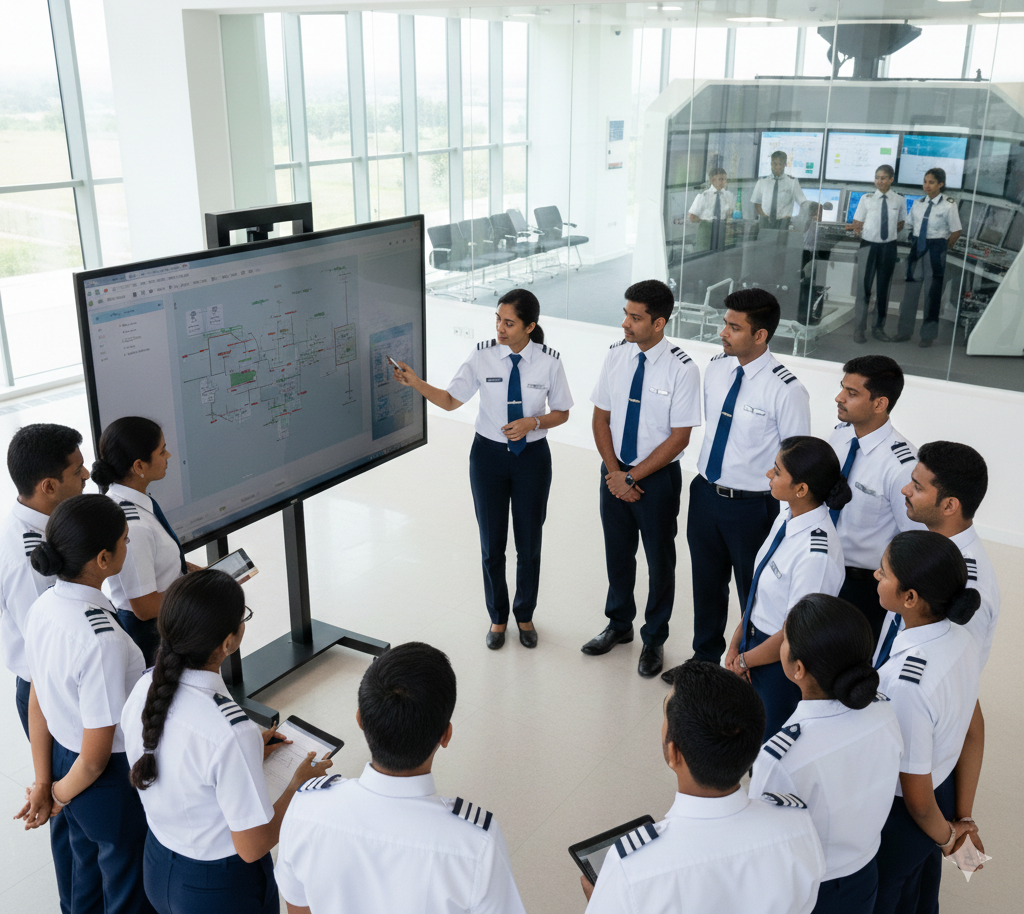
Selecting the right flight school requires careful evaluation of simulator quality and curriculum integration. Approved devices, experienced instructors, and structured lesson planning are essential indicators of training quality.
Students should ensure simulator hours are used to enhance learning rather than replace essential real-flight exposure. Well-integrated simulator programs produce pilots who are operationally prepared and technically confident.
Conclusion
Simulation training offers clear value when integrated correctly into pilot education. It improves safety, reduces unnecessary training costs, and prepares students for real-world operational demands.
When combined with structured aircraft flying, simulation training significantly enhances pilot readiness, employability, and long-term professional credibility.
Frequently Asked Questions
Why are some flight instructors against simulator training?
Some instructors worry that simulators cannot fully replicate real aircraft sensations like vibration, G-forces, and weather effects. They also fear students may develop habits that don’t transfer perfectly to real flight. This skepticism often comes from traditional training backgrounds rather than flaws in modern simulation technology.
Do pilots gain real-life experience from flight simulators?
Yes, pilots gain real operational experience from simulators, especially in procedures, decision-making, and emergency handling. Simulators are highly effective for instrument flying and abnormal scenarios. However, they do not fully replace real aircraft experience due to limited physical feedback.
Why are flight simulators not as effective as real flight experience?
Flight simulators cannot fully reproduce physical sensations such as G-forces, vibration, spatial disorientation, and real-world stress. These elements are critical for developing instinctive flying skills. This is why simulator training is most effective when combined with actual flight hours.
What are the advantages of using flight simulators for pilot training?
Flight simulators improve safety, reduce training costs, and allow pilots to practice emergencies repeatedly without risk. They provide consistent, controlled environments ideal for learning procedures and decision-making skills.
What are the disadvantages of flight simulators in pilot training?
Simulators lack full sensory realism and cannot replicate real-flight stress, weather unpredictability, or physical aircraft feedback. This limits their ability to fully replace hands-on flying experience.
Are flight simulators a replacement for real flight training?
No. Flight simulators are a training supplement, not a replacement. They enhance learning efficiency but must be combined with real aircraft flying for complete pilot skill development.
Why do modern pilot training programs still rely heavily on simulators?
Because simulators allow safe, cost-effective training for complex and emergency scenarios that are impractical or unsafe to practice in real aircraft.
Is simulator training mandatory for becoming a pilot?
Simulator training is required for specific licenses, instrument ratings, and airline programs, though it may not be mandatory at every training stage.
Can simulator hours replace real flight hours?
Simulator hours can replace a limited portion of flight hours depending on regulatory approval, but they cannot fully substitute real aircraft flying.
Do airlines accept simulator-based training?
Yes. Airlines rely extensively on full flight simulators for type ratings, recurrent checks, and emergency training.
Is simulator training useful for beginners?
Yes. Simulators help beginners develop cockpit familiarity, procedural understanding, and confidence before transitioning to real aircraft.
Call our Admission Desk: +91-9319193602 / +91-9319193605
Email: enquiry@vfti.in